New Toyota Hilux Unveiled: First BEV (electric) and FCEV Model, Alongside 2.8L Diesel
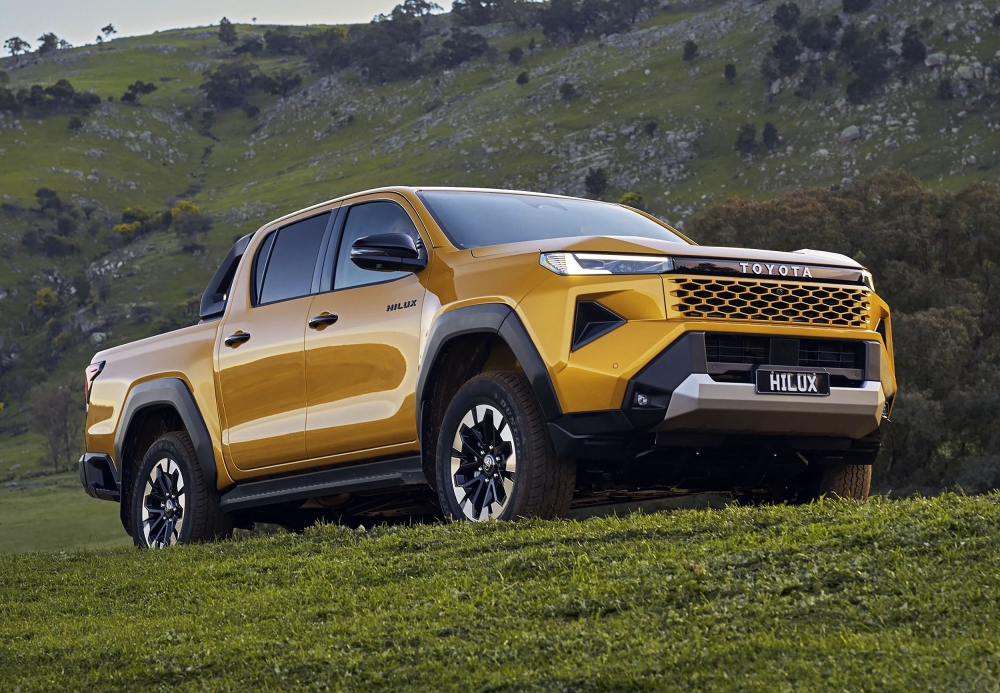
Toyota has revealed the long-awaited new generation Hilux, marking a turning point as the iconic pickup truck enters the electrified era. The ninth generation retains the brand’s global reputation for durability, reliability and quality (QDR), while adding significant innovations in design, comfort and safety technology.
Exterior and Interior Design: From "Tough" to Premium
The new Hilux adopts an exterior design theme called "Tough and Agile", projecting a strong allure through revised frontal proportions and a visibly more solid stature. The redesigned front end includes slim headlamps, connected by a central bar that displays the TOYOTA name in a classic style. To facilitate access, a new step on the rear axle and a redesigned side step have been integrated. In line with customer preferences, the new model will be available exclusively in the Double Cab body style.
Inside, the cabin has been given a major upgrade, achieving a level of perceived quality influenced by the new Toyota Land Cruiser. The centre console has been redesigned on a horizontal structure that houses both the 12.3-inch customizable digital instrument panel for the driver and the central multimedia touchscreen, also up to 12.3 inches. Vital controls for the all-wheel drive and off-road systems are now grouped centrally for intuitive use. Connectivity features are modern, including wireless charging for devices and new USB ports in the rear of the cabin. Customers will also be able to access connected services and vehicle data via the dedicated MyToyota app.
Motorizations and Electrification: The Multi-Path Approach
The new generation Hilux perfectly illustrates Toyota's philosophy of offering multiple powertrain solutions (multi-path) for electrification. The range of engines will be the most extensive in the model's history.
For Eastern European markets, including Romania, the internal combustion engines will be maintained. Here, the robust 2.8-liter diesel engine (replacing the 2.4-liter) will be available alongside the 2.7-liter gasoline engine.
The electrified segment will be dominated by the 48V Hybrid (Mild-Hybrid) version. This system, which will become the best-selling in Europe when production begins in spring 2026, uses a 48V lithium-ion battery and an electric motor-generator, mounted without compromising interior space (the battery is under the rear seats). The Mild-Hybrid technology supports the 2.8-liter diesel engine to provide smoother and quieter performance, especially when starting from a standstill and during acceleration, while maintaining a water fording capacity of 700 mm and an impressive towing capacity of 3,500 kg.
The big innovation is the introduction of the first pure electric Hilux, called BEV (Battery Electric Vehicle), scheduled to be introduced in the range from 2026. It is equipped with a 59.2 kWh lithium-ion battery and benefits from permanent all-wheel drive provided by e-axles on both axles. Although designed primarily for fleets that want zero emissions, the Hilux BEV retains the model's off-road capabilities, with specific battery protection measures. Preliminary WLTP autonomy is estimated at approximately 240 km, and the payload at approximately 715 kg.
The future brings another zero-emission alternative: in 2028, the launch of the FCEV (Fuel Cell Electric Vehicle) version is confirmed, equipped with a hydrogen fuel cell system from Toyota.
Advanced Dynamics and Safety
The new Hilux significantly improves driving dynamics with the introduction of Electric Power Steering (EPS), a first for the Toyota Hilux. This system provides more precise operation, enhanced low-speed maneuverability and reduced shock when driving over rough terrain.
The suspension has also been revised, benefiting from two distinct settings: one optimised for heavy-duty use (WorkMate and SR trims) and another, with different spring rates, focused on everyday and adventure comfort (SR5 trims and above). Off-road capabilities are enhanced by the Multi-Terrain Select (MTS) system, standard on automatic 4x4 versions, which optimises traction on various surfaces.
The active safety package, Toyota T-Mate, has been significantly expanded to include the latest Toyota Safety Sense systems. New features include Proactive Driving Assist, Low Speed ??Acceleration Suppression and an Emergency Stop System. Additional systems such as Blind Spot Monitoring and Safe Exit Assist are also available.
Availability and Price Estimate in Romania
Although the launch in major markets, such as Australia, is scheduled for the end of 2025, and Mild-Hybrid production starts in Europe in spring 2026, the introduction of the new generation Hilux in Romania, especially the versions with conventional and Mild-Hybrid engines, is most likely expected towards the end of 2026 or the beginning of 2027.
Given the technological developments, design and safety upgrades, it is estimated that the starting price of the new Hilux will increase compared to the previous model. If the current price starts around 42,000 EUR (including VAT), the new generation could start from around 45,000 EUR - 48,000 EUR (including VAT) for Double Cab versions with conventional or Mild-Hybrid engines, with higher versions easily reaching the 60,000 EUR threshold.