Geely conquers Europe from within: The deal with Ford that bypasses trade barriers
Valencia, Spain – In a move that seems straight out of an industrial geopolitics textbook, American giant Ford and Chinese giant Geely Auto have reached an agreement that promises to change the European automotive landscape forever. The subject of the transaction? The assembly hall (Body Shop 3) at the Almussafes plant in Valencia, a space that, until recently, represented the “tip of the spear” of Ford production in Europe.
While Ford CEO Jim Farley has been publicly warning in recent years about the "existential threat" of Chinese manufacturers, the reality on the ground shows a much more nuanced story: one of pragmatism and survival.
New life for the Mondeo's "ghost" lines
The production hall targeted by Geely is not just any building. It is where, until 2022, the flagship models Mondeo, Galaxy and S-Max were manufactured. After their withdrawal from the portfolio, the section remained inactive, becoming a symbol of Ford's temporary decline in the region.
If the talks go according to plan, Geely will not only "wipe the dust" off the machines, but will also gain the ability to carry out complete vehicle production in the heart of Europe, thus avoiding the stinging tariffs imposed by the EU on cars imported from China.
GEA Platform: The Brains Behind the Operation
Geely is not coming to Spain with old technology. The plan foresees the use of the new GEA (Global Intelligent New Energy Architecture) platform, a state-of-the-art modular architecture that allows the production of:
- 100% electric vehicles (BEV)
- Plug-in hybrids (PHEV)
- Classic hybrids (HEV)
The star of the speculation is the Geely Xingyuan model (known internationally as the EX2). This is a compact electric SUV, ready to "attack" the segment occupied by the Renault 5 or Volkswagen ID.2, with an estimated price below the 20,000 euro threshold.
Geely EX2 (Xingyuan) specifications:
- Length: 4.13 meters (ideal for European cities).
- Autonomy: Between 310 and 410 km (CLTC cycle).
- Technology: Flyme Auto operating system and L2 advanced driving assistance.
The Ford Paradox: Will Puma's Successor Have Chinese Genes?
The most surprising twist in this collaboration is the possibility that Ford could develop a successor to the Puma model based on the same GEA platform. It would be a major strategic move: Ford would benefit from the Chinese's cost efficiency and battery technology, while Geely would gain legitimacy in the Western market.
It is a "marriage of convenience" that could save thousands of jobs. Currently, the Valencia plant is operating at minimum capacity, producing less than 100,000 units per year (mainly the Kuga model). Returning to the pace of 300,000 vehicles per year would mean security for the more than 4,000 employees on temporary layoffs (ERTE).
The numbers behind the Geely "invasion"
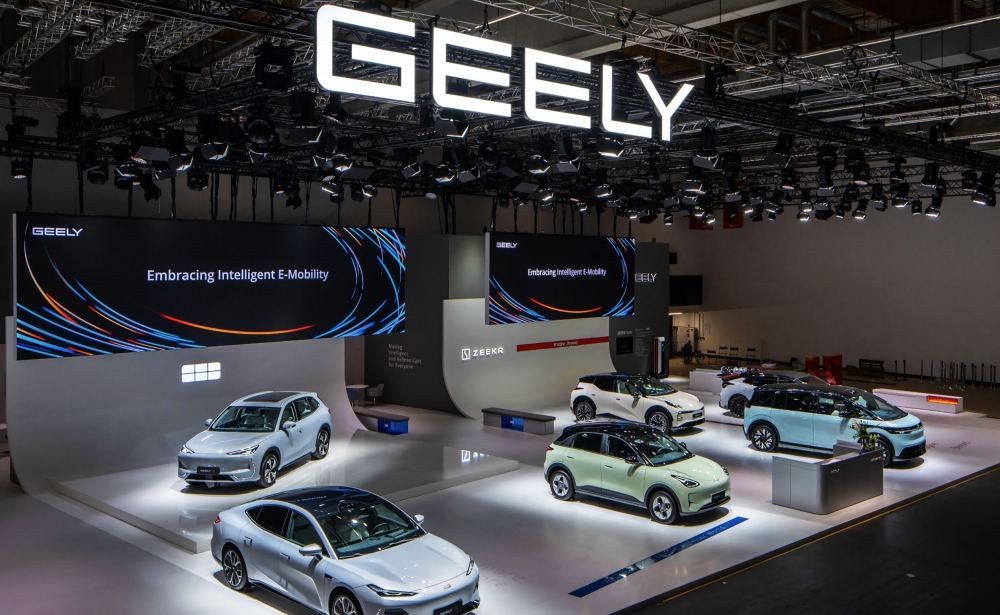
Geely's success in the first quarter of 2026 is hard for competitors to ignore:
- Total sales: 709,000 units.
- Market share: It grew to an impressive 11.95%.
- Exports: 126% explosion compared to the previous year (203,000 units).
Conclusion: Europe, the playground of new alliances
The Valencia deal demonstrates that the barriers between traditional manufacturers and the "new guard" from the East are increasingly porous. For Ford, it is a way to optimize costs and stay relevant. For Geely, it is the definitive ticket to the table of the rich in Europe.
It seems that in 2026, the future of the American car "Made in Spain" speaks, ironically, with a very pronounced Chinese accent.
Do you think this technological collaboration between Ford and Geely will dilute the American brand's identity in the eyes of European customers, or is it simply the only path to more affordable prices for electric cars?