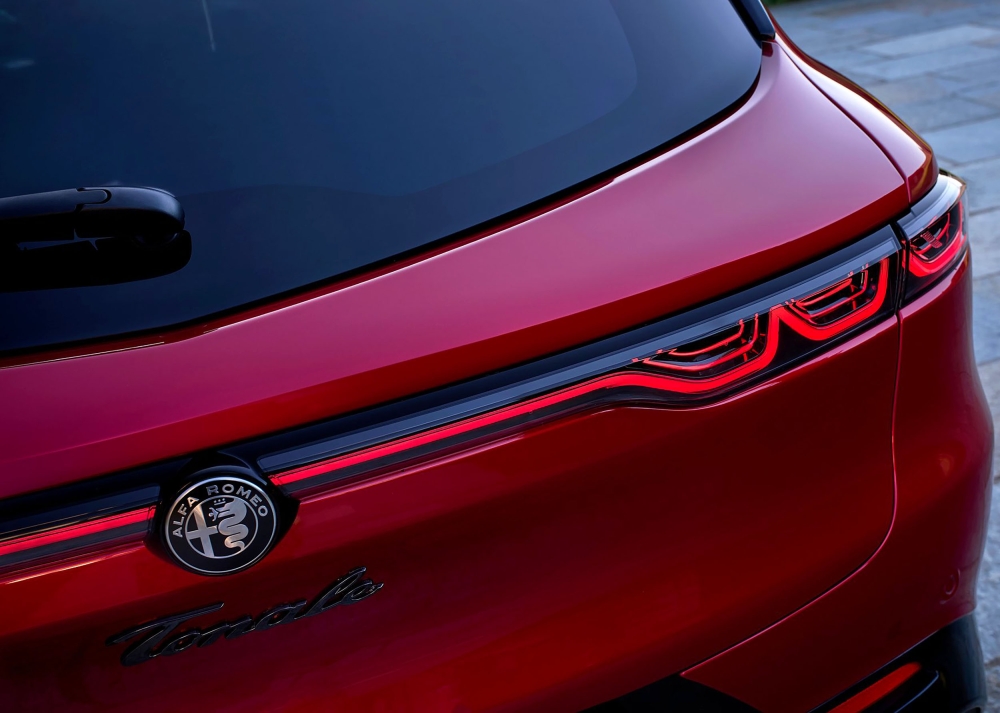
Cuore Sportivo remains connected to reality: Alfa Romeo postpones the "divorce" from internal combustion engines
Just a few years ago, the auto industry seemed to be engulfed in an irreversible electric frenzy. Alfa Romeo, a brand defined by emotion and the unmistakable sound of its engines, was no exception, promising a radical transformation. However, under the leadership of new CEO Santo Ficili, the Italian brand is taking a strategic step back, prioritizing pragmatism over total ecological idealism.
The message is clear: full electrification is not a universal solution, at least not yet.
"The world is not ready": Santo Ficili's global argument
In a recent interview with Autocar, Santo Ficili explained the reasons behind this change of direction. While the pressure of European regulations remains high, Alfa Romeo is a global brand and the infrastructure and consumer appetite for battery electric vehicles (BEVs) varies dramatically from one continent to another.
"We have to consider the whole world because the brand is global. The world is not ready everywhere for electric cars," Ficili said.
This recognition marks a departure from previous plans to transform Alfa Romeo into a purely electric brand by the end of this decade. Furthermore, rumours of a name change to "Alfa e-Romeo" now seem to be a thing of the past, keeping the brand's historic identity intact.
Giulia and Stelvio: New life on the STLA Large platform
The most important news for fans of the brand concerns the future generations of the Giulia and Stelvio models. While it was initially expected that they would be launched exclusively as electric models, the strategy has changed radically.
The new models will be built on the Stellantis Group's STLA Large platform, an extremely flexible architecture that allows the integration of multiple types of propulsion.
- Diversity under the hood: The future range will include internal combustion (ICE), hybrid (PHEV) and electric (BEV) engines.
- Uncompromising performance: Even the legendary Quadrifoglio Verde version will benefit from this dual treatment. Customers will be able to choose between the brutality of a high-performance combustion engine and the instantaneous acceleration of an electric drive.
Why did the "Sprint" to electricity fail?
The automotive market is going through a period of "cooling off" in terms of electric car sales. The lack of a homogeneous charging infrastructure, high prices and uncertain resale value have led many customers to remain loyal to internal combustion engines.
For Alfa Romeo, a brand where the driving experience and sound are central pillars, forcing a transition to electric could have meant alienating its loyal fan base.
| Powertrain Type | Status in the New Alfa Romeo Strategy |
| ICE (Internal Combustion) | Retained for regions and customers demanding traditional performance and sound. |
| PHEV (Plug-in Hybrid) | The ideal transition solution to balance emission targets with long-distance autonomy. |
| BEV (Battery Electric) | Offered as a high-tech alternative for markets with mature charging infrastructure. |
Conclusion: A middle ground for the future
Santo Ficili's strategy is not an abandonment of progress, but an adaptation to the real needs of the market. By maintaining thermal and hybrid engines in parallel with the development of electric technology, Alfa Romeo ensures its survival in an industry in full transformation.
Ultimately, the goal remains the same: to offer a car that inspires passion, whether under the hood is a state-of-the-art battery or a piston engine that "breathes" gasoline. The transition will happen, but at the pace dictated by reality, not optimistic forecasts.