BMW M introduces pre-chamber ignition to meet Euro 7 standards
The days when internal combustion engines seemed doomed by increasingly strict pollution regulations seem to have come to an end, at least in the Bavarian backyard. BMW M has just brought out the "ace from the cylinder head": the BMW M Ignite.
This pre-chamber ignition technology promises to preserve the pure spirit of the performance division, while managing to "tame" consumption figures and emissions under the spectrum of Euro 7 norms. Here's everything you need to know about the innovation that will hit the streets in the summer of 2026.
A new heart for the legendary S58
Under the hood of the M2, M3 and M4 models, the famous 3.0-liter inline-six engine (code S58) is undergoing a profound transformation. While power and torque remain unchanged — reassuring news for purists — their efficiency under full load takes an impressive leap.
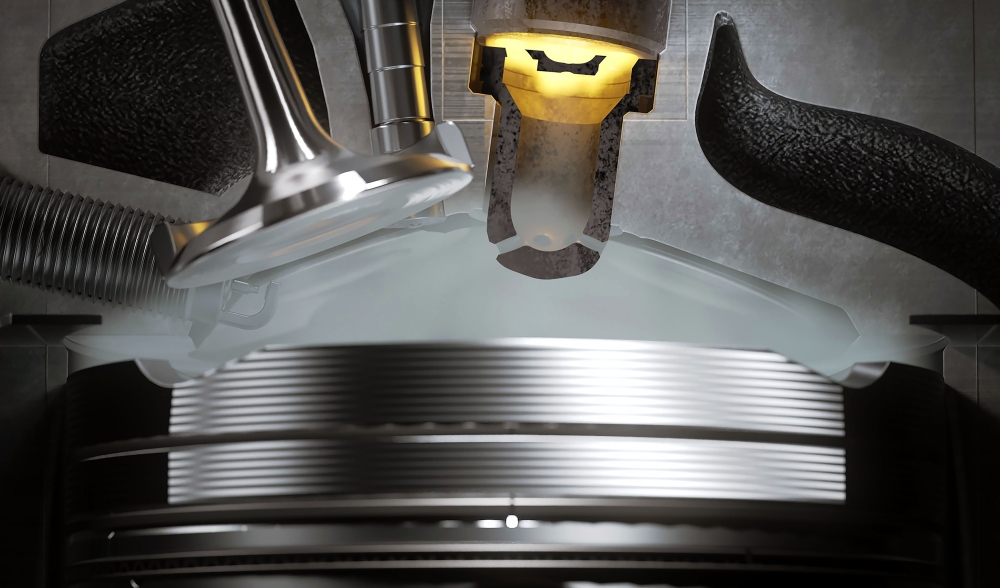
The secret lies in BMW M Ignite, a dual ignition system derived directly from the world of motorsport. The technology, patented by BMW since 2024, introduces a combustion pre-chamber inside the cylinder head, radically transforming the way fuel is converted into energy.
How does the "magic" in the antechamber work?
Unlike a conventional engine, where the mixture is ignited directly in the cylinder, the M Ignite system uses a two-stage approach:
- Dual System: Each cylinder now has two spark plugs and two ignition coils.
- Cruising mode: At low and medium revs, the main spark plug operates normally, ensuring smooth running.
- “Attack” mode: When you press the accelerator pedal and the revs rise, the pre-chamber takes over. A portion of the mixture is directed into this small chamber and ignited. The resulting flames are expelled through special orifices at near-sonic speeds, igniting the mixture in the main chamber at multiple points simultaneously.
The result? Much faster combustion, elimination of the risk of "detonation" (knocking) and lower exhaust gas temperatures.
More than just an extra spark plug
BMW didn't just stop at the ignition system. To maximize the potential of the new technology, the engineers in Munich made essential hardware changes:
- Variable geometry turbochargers (VTG): For the first time on the S58 engine, this technology (previously used mainly on diesel engines or by Porsche on gasoline) allows for instant turbine response at any speed.
- Increased compression ratio: Thanks to more precise combustion control, the engine can operate with higher compression, which means more energy extracted from every drop of gasoline.
- Revised sound: BMW claims that the new dual-ignition system delivers a more aggressive, throaty sound at high revs, while retaining the acoustic excitement typical of M models.
Release calendar: When will we see M Ignite on the streets?
If you were planning to update your garage, here are the official production dates for the new versions equipped with M Ignite:
| BMW M Model | Production Start | Technology Included |
| M3 (All versions) | July 2026 | BMW M Ignite + VTG |
| M4 (All versions) | July 2026 | BMW M Ignite + VTG |
| M2 | August 2026 | BMW M Ignite + VTG |
Conclusion: Survival through innovation
The introduction of the BMW M Ignite is a direct response to the Euro 7 regulations, which will come into force in November 2026. Instead of resorting to forced hybridization or downsizing, BMW has chosen to refine thermodynamics to an almost obsessive level.
For fans of the brand, this is a clear signal: the inline six-cylinder engine still has a lot to say, and raw performance doesn't have to come at the price of astronomical consumption or exclusion from city centers.
Do you think this additional mechanical complexity will make M engines as reliable in the long term as previous generations?