Toyota Dominates the Market in 2026: Half of Global Sales Are Electrified Models
In a global context marked by economic uncertainty and rising tariff pressures, Toyota Motor Corporation has once again demonstrated why it holds the crown as the world's largest automaker. The results published for January 2026 highlight a historic shift in the Japanese giant's strategy: 50% of vehicles delivered globally were equipped with electrified powertrains.
Record Sales Under Tariff Pressure
The Toyota Group (which includes the Toyota and Lexus brands) reported total sales of approximately 823,000 units in the first month of the year. The performance is all the more impressive as the brand has had to navigate a difficult trade landscape, including new 15% import tariffs imposed on the US market and fierce competition from Chinese manufacturers.
Of total sales:
- Over 700,000 units were sold outside Japan.
- The international market recorded a growth of 6.1% compared to January 2025.
- In the US and China, Toyota and Lexus cumulative sales increased by 8.1% and 6.6%, respectively.
The Hybrid Era: The "Heart" of Toyota's Success
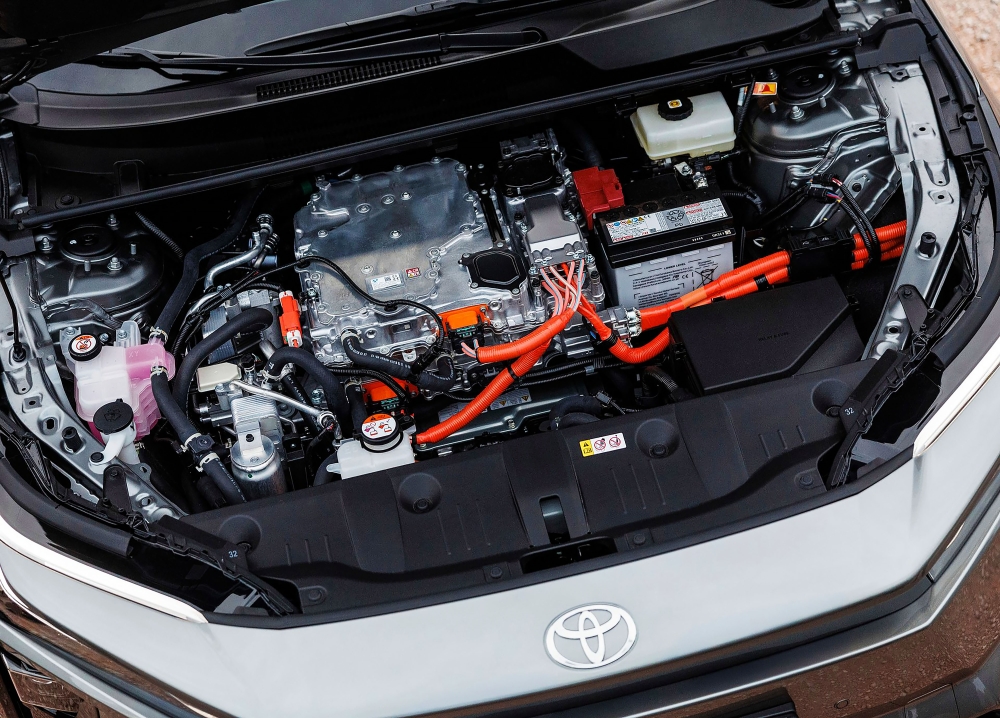
The figure that caught the attention of analysts is the milestone of 414,000 electrified vehicles sold in a single month. Toyota has bet on a multi-technology strategy, refusing to focus exclusively on 100% electric cars, and the numbers prove it right.
| Powertrain Type | Units Sold (Jan. 2026) | Growth vs. Jan. 2025 |
| Full Hybrid (HEV) | 365,499 | Market Leader |
| Battery Electric (BEV) | 22,306 | +87.5% |
| Mild-Hybrid (MHEV) | 13,958 | +17.5% |
| Plug-in Hybrid (PHEV) | 12,510 | -8.2% |
| Total Electrified | 414,273 | ~50% of total sales |
While conventional hybrids remain the main profit driver, the pure electric vehicle (BEV) segment has exploded, nearly doubling in volume from the previous year. At the opposite end, PHEV (plug-in hybrid) models have seen a slight decline, a sign that the public prefers either the simplicity of a classic hybrid or a full-on electric transition.
The Future: Solid-State Batteries and New Horizons
While January's figures confirm the current success, Toyota is preparing the "coup d'état" for the second half of the decade. The company recently reconfirmed progress in the development of solid-state batteries, receiving production approvals from the Japanese government.
These batteries promise ranges of over 1,200 km and charging times of under 10 minutes, with the first units expected to enter limited production between 2027 and 2028. Until then, models such as the new Toyota C-HR BEV and the upcoming three-row electric Highlander (recently announced for North America) will support the brand's assault on the "zero emissions" segment.
"Toyota's resilience in an industry crushed by tariffs and uncertainties over the EV transition is remarkable. Their industrial scale and supply chain flexibility keep them in a league of their own," industry analysts note.
Toyota ended 2025 with a record 11.3 million vehicles sold, and the launch of 2026 suggests that the gap with the Volkswagen Group will only increase.