Electric car sales grow driven by Europe and the energy crisis, while the US and China retreat domestically
The global market for electrified vehicles (EVs and PHEVs) is undergoing a period of profound reconfiguration and accelerated regional fragmentation. According to the latest data published by the consulting company Benchmark Mineral Intelligence (BMI), April 2026 brought global sales of 1.6 million units. Although the figure represents a 6% increase compared to the same month last year, it still marks a 9% decrease compared to the historical record recorded in March. In this contrasting landscape, Europe has emerged as the main driver of the global energy transition, offsetting the visible decline in North America and the moderation of demand in the domestic market in China.
Geopolitical tensions and gasoline prices, catalysts for Europeans
The international political and economic context continues to decisively influence purchasing behavior. The conflict in Iran and the wider instability in the Middle East have put enormous pressure on global oil supply chains, keeping traditional fuel prices extremely high at the pump. This phenomenon has acted as a catalyst for European drivers, forcing them to look for alternatives to circumvent the high operating costs of internal combustion engine cars.
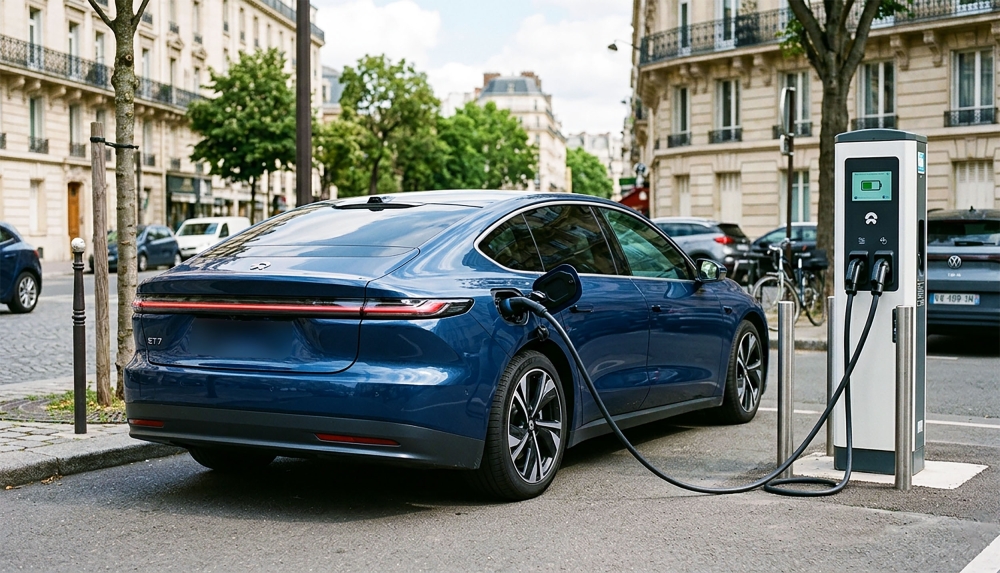
While in January and February the growth of electric car and PHEV sales in Europe was at a robust level of 19% compared to the same period in 2025, in March and April the pace accelerated spectacularly, reaching a 30% advance. This transition is also supported by massive investments in infrastructure: the states of the European Economic Area and Switzerland have recently allocated a record amount of almost 200 billion euros to expand regional recharging networks.
Europe excels, driven by large economies
In April, around 400,000 electric and plug-in hybrid cars were sold on the Old Continent. Due to the exhaustion of some incentive schemes at the end of the first quarter, April volumes were 24% lower than in March. However, compared to April 2025, the European market recorded an impressive 27% jump.
Performance at the national level reflects successful public policies and a major public interest:
- Italy: Sales nearly doubled amid the introduction of substantial new government subsidies.
- France: 36% increase in registrations of electrified vehicles in the first four months.
- Germany: 33% advance, supported by new tax measures for commercial and corporate fleets.
The offensive of Chinese manufacturers in Europe
An increasingly visible reality on European roads is the expansion of Asian brands. BMI data shows that 22% of electric cars and PHEVs sold in Europe this year were produced in China, up from 19% in 2025. Manufacturers such as BYD and Leapmotor are rapidly expanding their ranges and distribution networks, offering competitive models that appeal to European buyers.
Sharp decline in North America and the Chinese domestic market
In stark contrast to Europe’s dynamism, North America is going through a painful period of readjustment. The North American market saw a 25% decline in the first four months of the year (and April alone saw a 28% year-on-year decline, with just 120,000 units delivered). The changing political outlook in Washington, materialized by the reduction of incentives for electric vehicles, has led giants like Ford, General Motors, and Stellantis to record billions of dollars in writedowns and temper their electrification plans, pivoting partly back to classic hybrid or internal combustion models.
China is also not doing as well domestically. Sales in the Chinese domestic market fell 17% in the first four months (and 8% in April). The slowdown is particularly concentrated in the segment of small and cheap electric cars, after the government in Beijing introduced a purchase tax and reduced the generosity of "Scrap" programs. Local buyers have adopted a wait-and-see strategy for the time being.
Chinese factories are exporting massively to offset declines in the country
Although domestic demand in China has weakened, the country's assembly lines are operating at full capacity, and the surplus is being directed to foreign markets. Chinese exports of electric cars and PHEVs have simply exploded. In April alone, China sent 400,000 electrified vehicles across its borders.
Looking at the big picture, in the first four months of 2026, China's exports reached 1.4 million units, almost double the figure for the same period in 2025.
Conclusion
The global electric mobility market has become a highly fragmented mosaic. While political and economic uncertainties are holding back adoption in North America and China’s domestic market, Europe remains the global stronghold of electrification, driven by high fuel prices and an increasingly robust infrastructure. For international automakers, geographic flexibility and the ability to compete with aggressive Chinese export prices will be decisive in the coming months of 2026.