Attack on Dacia Spring - BYD brings a new electric city model with a range of 320 km to Europe
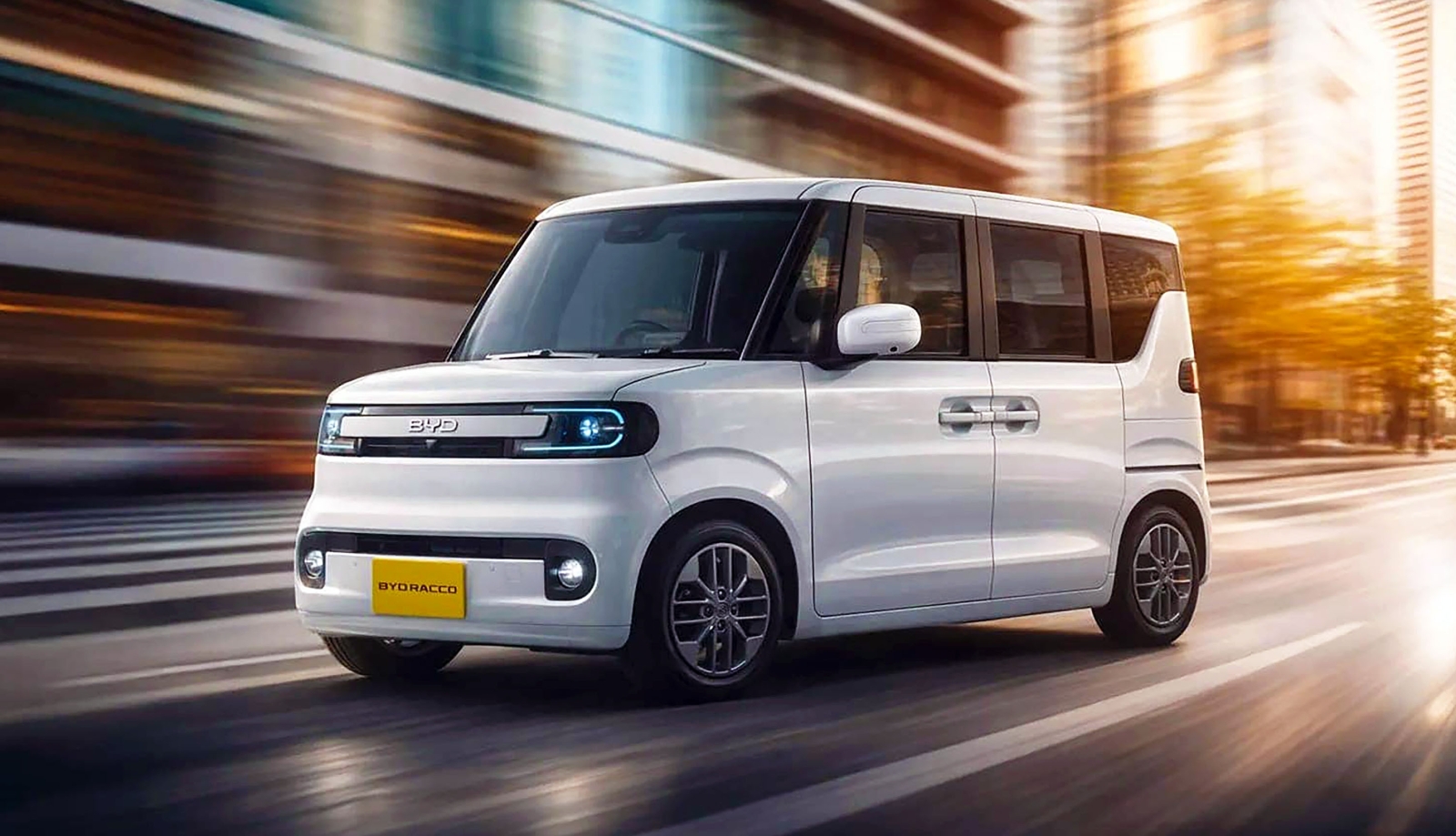
Chinese automaker BYD is preparing its next strategic move into the global electric vehicle market. The company plans to develop a new compact model specifically designed for international markets — including Europe — built on its X-Pack powertrain and battery architecture. This innovative technology was first introduced in the BYD Racco, a vehicle sold exclusively in the Japanese market.
The decision to expand the use of X-Pack technology globally comes from the Chinese giant's desire to recoup its massive investments in research and development through large-scale production.
X-Pack innovation: More interior space in an ultra-compact format
The technical core of the new model is the integrated X-Pack architecture. Unlike conventional electric cars, where the inverter, converter and electronic components of the propulsion system are traditionally located under the front hood, the X-Pack technology combines all these assemblies directly into the battery pack installed under the floor.
Although the integration of components into the battery (cell-to-pack or cell-to-body type) is also being explored by other manufacturers, its application to small vehicles brings a decisive advantage: the optimization of interior space. On the Japanese Racco model, classified in the strict category of kei vehicles (limited by law to a maximum length of 3.4 meters), the elimination of massive components under the hood allowed the expansion of the passenger compartment and the achievement of a surprisingly generous usable space.
On the Racco architecture, the battery pack offers a capacity of up to 36 kWh (the top version has 35.84 kWh), ensuring an official range of 320 kilometers. This performance makes Racco the first model in its class capable of exceeding the 300 km threshold. In addition, the system supports fast charging in direct current (DC) of up to 100 kW, with the 10% - 80% charge being achieved in just 20 minutes.
European context: M1E directive and incentives for vehicles under 4.2 meters
The introduction of this model in Europe is closely linked to legislative changes. The European Union has outlined the framework for a new category of compact electric vehicles — known as E-car or M1E — intended for electric cars with a maximum length of 4.2 meters. The new framework provides a simplified legislative framework and allows member states to grant special subsidies, reduced taxes and parking or urban access facilities for small city cars.
By adapting X-Pack technology for a model under 4.2 meters, BYD positions its product ideally to benefit from the M1E category incentives. At the same time, cost optimization by using the same technological platform will allow the Chinese to maintain a competitive price, even in the context of European customs duties applied to electric vehicles imported from outside the EU.
Estimate: Price and availability on the Romanian market
BYD's new electric model is expected to appear on European markets, including Romania, in the next 2–3 years (estimated range 2027–2028).
- Estimated starting price: In Japan, the BYD Racco is sold at a price equivalent to approximately 14,000 – 16,000 euros. For the Romanian market and the rest of the EU — where safety regulations (mandatory ADAS systems according to the GSR2 Directive) and approvals increase final costs —, the new model is expected to have a starting price between €16,000 and €19,000 (without subsidies).
- Cost through the Rabla Plus Program: Assuming that Romanian buyers will be able to access government eco-vouchers for electric vehicles or the new incentives specific to the M1E category, the effective price of the car could drop to an extremely attractive level, of approximately €12,000 - €14,000.
Market rivals: Is Dacia Spring's seat shaking?
The launch of an electric sub-compact with 100 kW charging and 320 km range will reconfigure the entry-level segment in Europe.
| Model | Estimated Range | Fast Charging (DC) | Estimated Price (Without Subsidies) |
| BYD X-Pack (Future) | ~320 km | Up to 100 kW (10-80% in ~20 min) | ~€16,000 – €19,000 |
| Dacia Spring | ~220 km | Max. 30 kW (Optional) | ~€17,000 – €20,000 |
| Leapmotor T03 | ~265 km | Up to 45 kW | ~€18,000 – €19,000 |
| Citroën ë-C3 | ~320 km | Up to 100 kW | ~€23,000 |
1. Dacia Spring (Direct Rival)
Dacia Spring remains the reference on the Romanian market for affordable electric mobility. However, the new BYD model with X-Pack architecture puts direct pressure on Spring in terms of technical specifications:
- Autonomy: BYD promises 320 km, compared to the Dacia Spring's ~220 km.
- Charging speed: The BYD's 100 kW charging significantly exceeds the 30 kW maximum speed offered optionally on the Spring (which takes almost an hour for a similar recharge).
- Cabin: Thanks to the consolidation of electrical components under the floor through X-Pack technology, the BYD model can offer superior interior space at similar exterior lengths.
2. Leapmotor T03
Produced by the Stellantis-Leapmotor partnership, the T03 is already a Chinese competitor partially assembled in Europe to avoid customs duties. The T03 is known for offering a good quality/price ratio, but BYD will try to increase it with the Blade battery technology (known for its durability and thermal safety) integrated into the X-Pack.
3. Citroën ë-C3 and Renault Twingo E-Tech
In the ~€20,000 area, the Citroën ë-C3 and the upcoming Renault Twingo EV represent the European alternative to the wave of Chinese cars. BYD aims to offer similar performance to the ë-C3 (range over 300 km, charging 100 kW), but with a more compact exterior and a significantly lower price, positioning itself exactly on the border between the A and B segments.