Panic at the pump, current in the batteries: Iran's oil crisis "electrifies" the European auto market
As the price of a liter of gasoline began to resemble a phone number, Europeans decided it was time to unplug their cars... literally. The conflict in Iran, which erupted in late February, sent shockwaves through the global economy, but also provided an unexpected boost to green mobility.
In the first quarter of 2026, Europe saw a massive increase in electric vehicle (EV) registrations as drivers desperately try to escape the “dictatorship” of the oil barrel.
Europe: March, the month when gasoline became a luxury
Data provided by E-Mobility Europe and research firm New Automotive show a tectonic shift in consumer behavior. While the market was still cautious in January, the March figures are downright explosive:
- Total Q1 registrations: Almost 560,000 electric cars.
- March jump: A 51.3% increase over last year (over 240,000 units).
- Market share: In March, 21% of all new cars in the EU and EFTA were electric.
- Energy impact: This accelerated transition has already reduced oil consumption by two million barrels per year.
Mature markets, such as Germany, France and Spain, have reported increases of over 40%, a sign that the infrastructure is ready to absorb this new wave of users "forced" by circumstances.
Romania: Between subsidy cuts and the "shock" at the gas station
The situation on the Romanian market is one full of contrasts. At the beginning of the year, the forecasts were bleak: the Rabla Plus 2026 program suffered budget cuts, and the subsidy for a purely electric model dropped to approximately 25,500 lei (about 5,000 euros), from the much more generous amounts in previous years.
However, the "miracle" occurred in March. When prices at the pump exploded amid the Iranian crisis, Romanians began looking for alternatives, regardless of subsidies:
- Record searches: Interest in electric cars on classifieds platforms (such as OLX and Autovit) increased by almost 40% in March.
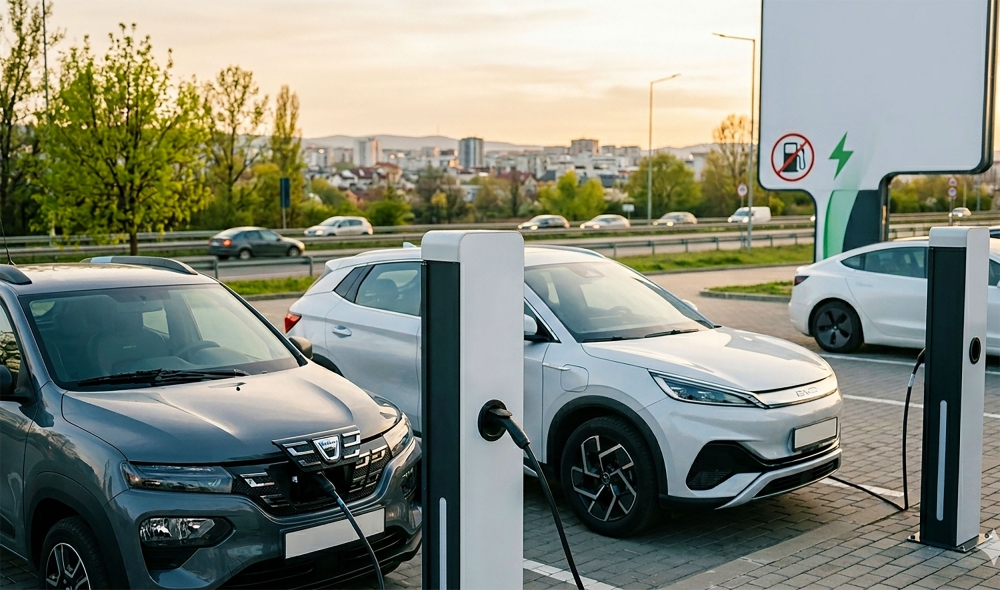
- New players: The local market has witnessed a meteoric rise of Asian brands. BYD managed to climb spectacularly in the top of preferences, competing directly with Tesla and Dacia Spring, offering models available immediately for those who no longer want to hear about the price of diesel.
- Local production: Ford, with models produced in Craiova (such as the new Puma Gen-E), has managed to capture a significant market share, taking advantage of buyers' desire to support local industry while saving on running costs.
"The explosive growth in electric car sales is one of Europe's most important recent gains in energy security. Oil dependence has become a real vulnerability," says Chris Heron, Secretary General of E-Mobility Europe.
What's next?
Although high electricity prices remain a challenge, the Total Cost of Ownership now tips the scales decisively in favor of electric. In Romania, although the Ministry of Environment prioritizes infrastructure projects through the PNRR over direct subsidies, free market pressure and the “hunger” for energy independence seem to be stronger drivers than any government bonus.
If the conflict in Iran continues, 2026 could go down in history as the year in which Europe decided, under the pressure of the crisis, to permanently cut the umbilical cord that connected it to oil from the East.