Romanian auto production fell by 6.6% in January 2026. Dacia and Ford assembled under 37,000 units
The year 2026 started at a somewhat slower pace for the most important pillar of the Romanian economy. According to the latest data provided by the Romanian Automobile Manufacturers Association (ACAROM), January marked an unexpected setback in the pace of the Mioveni and Craiova plants, signaling a year that promises to be one of transition and recalibration.
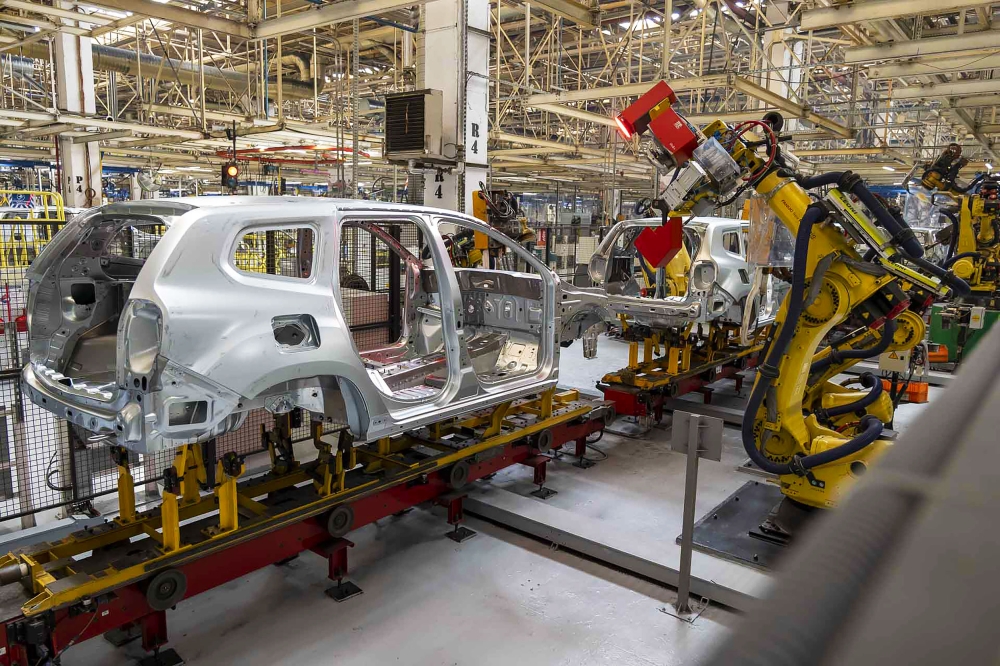
In the first month of the year, Romania produced a total of 36,875 new cars, a figure that, although solid at first glance, represents a decrease of 6.6% compared to the same period in 2025.
Production data: Dacia vs. Ford Otosan
Industrial performance was divided almost equally between the two major players, but both felt market pressures:
- Dacia (Mioveni Plant): It assembled 18,880 units. Although it remains the leader in volumes, Dacia is in a moment of reorganization of flows, as the range diversifies towards more complex models.
- Ford Otosan (Craiova Plant): Completed 17,995 units. The Craiova plant continues to rely on the success of the Puma model, but the pace was slightly tempered by preparations for the new electrified variants.
Why did the production engine "cough"? The main causes
This decline is not an isolated accident, but the result of a combination of economic and strategic factors:
- Transition to new models: Both Dacia and Ford are in the process of adapting their production lines. The launch of the new Dacia Bigster and the integration of electric versions for the Ford Puma (Gen-E) required technical shutdowns and adjustments to the manufacturing flow, a process that "eats" the total volume of units produced.
- Cooling of the European market: Given that over 90% of the cars produced in Romania are exported, any small hesitation of the consumer from Germany, France or Italy is immediately felt in Mioveni and Craiova. The economic uncertainty in the euro zone tempered the appetite for new purchases at the beginning of the year.
- Collapse of domestic demand: Locally, the data is even more drastic. New car registrations in Romania fell by over 33% in January 2026, a sign that Romanians have become much more cautious with their budgets, amid persistent inflation and high financing costs.
What's next in 2026? Trends and Predictions
Despite the hesitant start, the auto industry is not showing signs of panic, but rather of "settling down." Here's what will define the rest of the year:
- Hybrid and Electric Offensive: 2026 is the year Romania becomes a major hub for green propulsion. Bigster and the new Puma variants will attract a new category of customers, probably compensating for the volumes lost in the thermal segment.
- Staff Adjustments: There are already signs of voluntary departure programs at Mioveni, as automation and the shift to electric vehicles (which require less direct labor) begin to take hold.
- Slight tax relief: The halving of the minimum turnover tax (IMCA) for 2026 provides manufacturers with a necessary "breath of fresh air" to maintain investments in technology.
Conclusion
January 2026 was a more difficult "warming up" month, marked by declines both on the production line and in showrooms. However, the 6.6% decline should be seen as a reconfiguration stage. With new models ready to invade European markets in the second half of the year, it is very likely that the Romanian automotive industry will recover lost ground and end 2026 on an upward slope.