Alarm Signal on the Auto Market: Rabla 2026 Program, in Danger of Cancellation
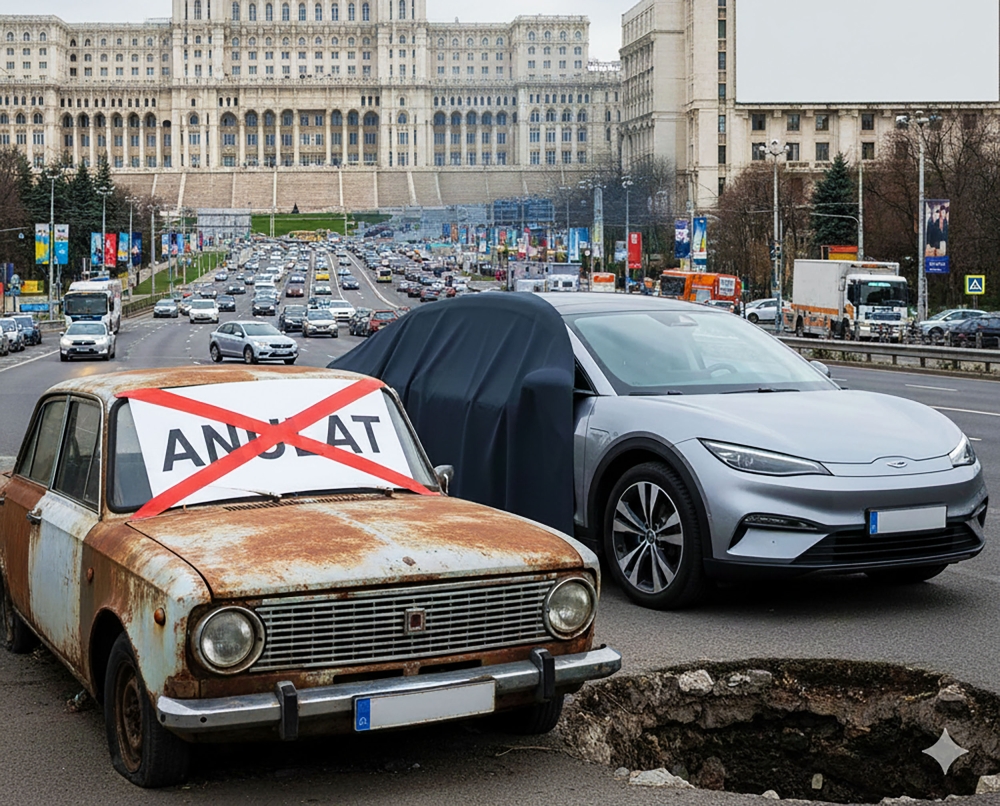
Recent statements by the Minister of Environment, Waters and Forests, Diana Buzoianu, question the future of one of the most popular and longest-running programs to stimulate the Romanian automotive market: the Rabla Program. The official warned that, in the absence of an identified budget and in the context of stringent financial priorities, the Rabla 2026 program could be canceled.
The main reason cited is the lack of funds, with the Environmental Fund Administration (AFM) most likely to prioritize the completion of outstanding projects from the PNRR that have lost their European funding and will be moved to the AFM budget.
"At this moment, there is no identified budget for the Rabla Program. We will have to have a serious discussion to think about next year's AFM budget," emphasized Diana Buzoianu.
This uncertainty arises in the context that, in 2025, although with a budget reduced to 200 million lei, funds for cars with thermal and hybrid engines were exhausted in just 13 minutes after the official launch, on September 30, a clear indicator of the huge demand that the program generates.
The Impact of Cancellation on Car Sales
A possible cancellation of the Rabla Program in 2026 would represent a significant shock to the Romanian automotive market, with a major impact on sales volume, especially for the affordable and environmentally friendly segments.
1. Drastic Decline in New Car Purchases
The Rabla program has operated for almost two decades as an essential engine for the renewal of the car fleet, encouraging the scrapping of old cars and the purchase of new, less polluting ones. Between 2005 and 2024, through Rabla Clasic and Rabla Plus, over 1 million vehicles were scrapped and about 720,000 new cars were purchased.
- Lack of financial incentive: The subsidies offered (the Rabla Clasic voucher for thermal cars, the superior vouchers for hybrids and electric cars) represent a decisive factor in the purchase decision, especially for middle-income customers. Without this support, many potential buyers would postpone the purchase or turn to the second-hand market, already overcrowded with old cars.
- Auto Industry Warnings: Representatives of the Automobile Importers and Distributors Association (APIA) and car dealers have warned in the past that a suspension of the Rabla could permanently endanger the market, undermining demand and affecting jobs in the sector.
2. Slowing the Transition to Electromobility
Although Rabla Classic has been extremely popular, the Rabla Plus component (for electric and plug-in hybrid cars) is crucial for achieving Romania's decarbonization targets. Although this year saw a decline in interest in electric cars (leading the AFM to shift funds from electric to thermal), the generous subsidy offered through Rabla Plus remains the strongest incentive.
- The lack of Rabla Plus would significantly slow down the adoption of electric vehicles, with the local market still heavily dependent on these government subsidies.
3. Worsening the Problem of the Aging Vehicle Fleet
Romania is facing one of the oldest car fleets in the European Union. Removing the Rabla Program from the equation would mean a failure in efforts to reduce the number of cars with polluting technologies, maintaining high emissions and poor air quality in major cities.
An Opportunity for Program Reform?
The Minister of the Environment also mentioned the possibility that, if a budget is identified, the Rubbish Program could be relaunched with new conditions:
- Prioritizing European Production: A proposed condition is to apply the Rabla only to cars produced in Europe. This would support the European and local auto industry, but could generate debates on competition and market access.
- Social/Income Criteria: There are discussions about introducing social eligibility criteria, with the money going primarily to those on low incomes, an approach similar to the social leasing model in France, which would subsidize electric cars at affordable prices.
In conclusion, although the cancellation of the 2026 Scrappage Program would be a severe blow to new car sales and environmental objectives, the current uncertainty also provides a framework for a fundamental rethinking of the program, orienting it more strictly towards environmental targets and towards social and economic efficiency criteria, if financing solutions are nevertheless found.