Mercedes-Benz Enters the Robotaxi Era: Autonomous Debut in Abu Dhabi
Strategic Partnership Redefins Mobility. German luxury carmaker Mercedes-Benz is taking a decisive step into the future of urban mobility by announcing the launch of its first fully autonomous robotaxi services. This foray is not a solitary project, but the result of a large-scale strategic partnership with Chinese autonomous driving company Momenta Global.
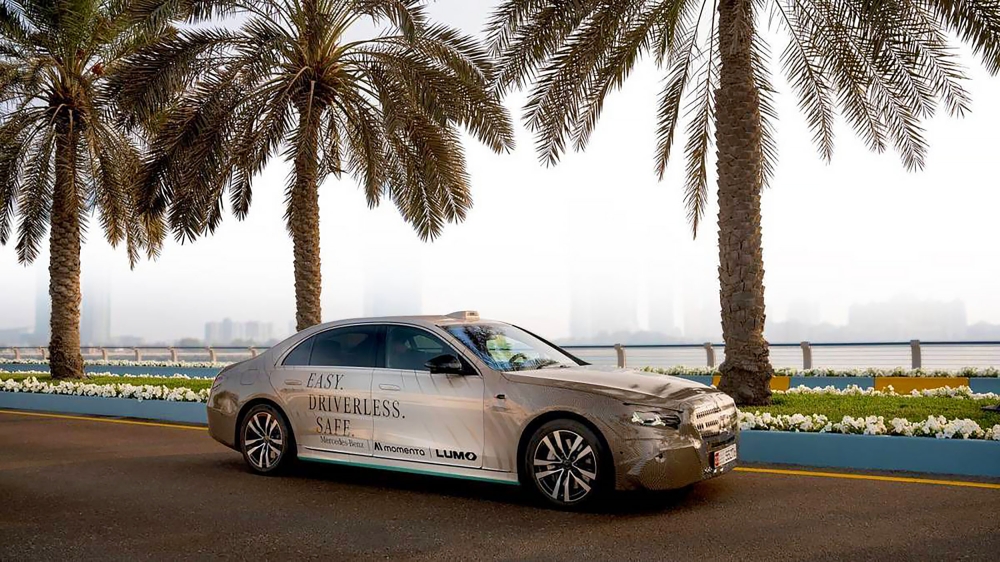
The market chosen for this groundbreaking debut is Abu Dhabi, United Arab Emirates, a global hub that has demonstrated a rapid openness to cutting-edge technologies. The vehicles will operate under the Lumo Mobility brand, officially marking the Stuttgart-based manufacturer's first foray into fully autonomous (Level 4) passenger transport services.
Level 4: Autonomy That Changes the Rules
The centerpiece of this initiative is the integration of Mercedes-Benz’s advanced software platform, MB.OS, with autonomous driving systems provided by Momenta. The project aims to implement Level 4 automation.
- What does Level 4 mean? Vehicles can handle all aspects of driving under certain conditions (e.g., pre-defined geographic areas or specific weather conditions) without requiring human intervention. The driver becomes, in effect, redundant in defined operational scenarios.
The hardware platform chosen to host this pioneering technology is the next generation of the flagship Mercedes S-Class, scheduled to debut on the market in January 2026.
Abu Dhabi was not chosen by chance. The city became the first in the MENA region (Middle East and North Africa) to issue permits for fully autonomous vehicles, providing an essential regulatory framework for such an experiment.
Strategic Benefit for Mercedes-Benz
The collaboration offers Mercedes-Benz a major strategic advantage: access to extensive operational data. Through Lumo Mobility’s existing operations in Abu Dhabi, the manufacturer will be able to collect vital information about vehicle behavior, interaction with infrastructure and user experience in real-world traffic conditions.
This data is crucial to accelerating the company's global autonomous vehicle strategy, serving as a foundation for future launches, including a future program with Uber in Germany, expected in 2026.
The Romanian Context: From Aspiration to Reality
While major automotive powers and advanced cities in the Middle East are already testing Level 4 autonomy, Romania is at an early stage in terms of regulation and the infrastructure needed for fully autonomous vehicles.
Challenges and Opportunities
- Legislative Framework: European legislation, although evolving, has not been fully transposed or adapted at national level to allow robotaxi operations. Clear regulations are needed on liability in the event of an accident, licensing of services and cybersecurity standards.
- Digital Infrastructure: Level 4 services critically depend on precise HD mapping, impeccable GPS signal and extensive and stable 5G connectivity, capable of ensuring constant communication between the vehicle and the command center (tele-operation). Although 5G networks are expanding in major cities in Romania, coverage is not yet sufficiently dense and homogeneous.
- Public Tolerance: Unlike Asian or Gulf markets, where rapid adoption of technology is encouraged by governments, the Romanian public, faced daily with unpredictable traffic and varied road infrastructure, may have greater initial reluctance to entrust their journey to an autonomous system.
Conclusion for Romania
It is unlikely that Romania will be among the first European countries to see Level 4 robotaxi services, such as those launched by Mercedes-Benz in Abu Dhabi, in the coming years.
However, partnerships like Mercedes-Benz – Momenta serve as a technological barometer. They show the direction the automotive industry is heading. As the technology becomes more mature and cheaper, and once the European Union standardizes regulations, member states, including Romania, will be forced to adapt their legislation and infrastructure.
Until then, Romanians will most likely benefit from a gradual implementation of advanced driver assistance systems (ADAS), which represent an essential intermediate step towards full autonomy.