Mercedes-Benz A-Class moves to Hungary: Why did Romania lose the "bet" with the German giant again?
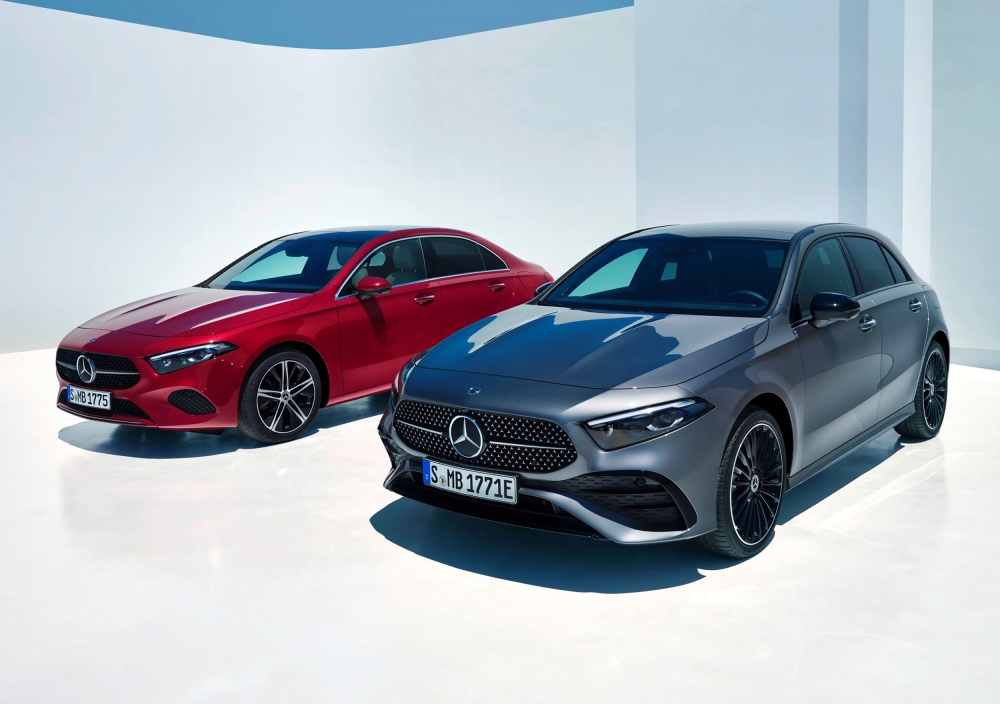
Starting this spring, the Mercedes-Benz production map is undergoing a major change. The A-Class, the most affordable entry point into the German brand's universe, is leaving the assembly lines in Rastatt (Germany) to be produced exclusively in the neighboring country, in Kecskemét.
The decision marks not only a logistical change, but also a strategic victory for Hungary, which is rapidly transforming into a European "bastion" of modern mobility, while Romania remains, unfortunately, a secondary destination for major premium car manufacturers.
A two-year "respite" for the smallest Mercedes
Although initial plans indicated that 2026 would be the last year of existence for the A-Class (W177), Mercedes-Benz has officially decided to extend the model's lifespan until 2028. This change in plans comes amid higher-than-expected demand for compact models with traditional engines and slower adoption of electric vehicles in certain segments.
To make room for new technologies in the German factories, production of the A-Class is being "outsourced" to the Hungarian plant, which has demonstrated remarkable operational efficiency over the past decade.
Kecskemét plant: A giant of 400,000 units
The German group's massive investments in Hungary (over 1 billion euros in the last expansion stage alone) have transformed the Kecskemét factory into an elite production center.
- Doubled capacity: With the completion of the new units, the plant will reach a capacity of 400,000 units per year.
- Advanced technology: In addition to the A-Class, future generations of electric compact models (based on the MMA platform) and strategic models such as the CLA or EQB will be produced here.
- Regional hub: Hungary thus becomes the only country in Europe where Mercedes-Benz owns, within the same perimeter, both a car factory and a battery assembly unit.
Why Hungary and not Romania?
Despite the fact that Romania hosts important factories of the group (Star Assembly in Sebe? and Star Transmission in Cugir), they exclusively produce subassemblies (gearboxes and engine components), not complete cars.
The difference between the Hungarian and Romanian success in attracting integral vehicle production lies in several critical points:
- Road infrastructure: Hungary offers direct and fast highway connections to the heart of Europe, a vital factor for Mercedes' just-in-time logistics.
- Stability and government support: The Kecskemét project received massive support from Budapest, being treated as a national economic security project.
- Supplier ecosystem: Hungary has managed to attract not only the automaker but also large battery cell manufacturers (such as CATL), creating a complete supply chain.
Conclusion
The move of A-Class production to Kecskemét confirms that the center of gravity of European car production is shifting eastward, but selectively. While Germany remains the research and production center for luxury models (such as the S-Class), Hungary is taking over for high volumes.
For Romania, the lesson remains of a lost opportunity to become a complete automaker in the premium segment, currently content with the role of supplier of essential components.