From Dreams to Nightmare: Analyzing the Impact of Chinese Competition on European Automakers
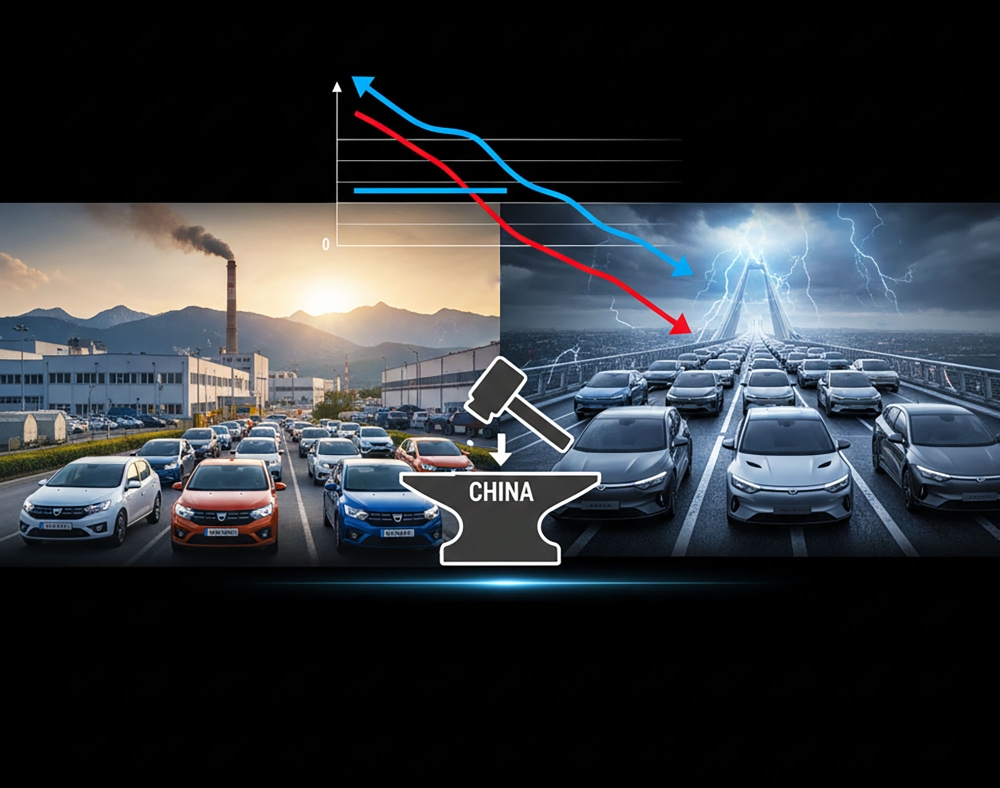
The stark warning issued by Ford’s CEO about the risk that Chinese automakers could endanger the very existence of Western companies, including Ford, has resonated like a wake-up call throughout the European auto industry. The statement underscores an increasingly obvious reality: competition from Asia, especially from China, is no longer marginal, but a force capable of redefining the global market, especially in the context of the transition to electric vehicles (EVs).
China’s Advantage and Pressure on Europe
Chinese automakers, led by giants like BYD and SAIC (MG), are building their advantage on a few key pillars:
- Lower Costs and Aggressive Pricing: Thanks to a well-established ecosystem for battery production (which accounts for a large part of the cost of an EV) and faster and cheaper development processes, Chinese brands can offer electric vehicles at significantly lower prices than their European counterparts.
- Technological Advancement in EVs: European Trade Commissioner Valdis Dombrovskis has publicly acknowledged that Chinese manufacturers hold a technological advantage in critical areas such as battery technology, software and infotainment systems.
- Speed of Innovation: Chinese companies are moving much faster, launching new models and technologies to the market at a dizzying pace, promptly adapting to consumer demands.
These advantages are putting enormous pressure on European manufacturers, forcing them to reorganize their operations, reduce costs (including through layoffs or factory closures), and accelerate the transition to EVs in order not to lose market share. Analysts estimate that Chinese brands could reach a market share of around 5% in Europe, and the impact is already being felt, with Chinese manufacturers already surpassing major European brands in sales in certain months.
Dacia on the Front Line: The Fight for Affordability
The Romanian manufacturer Dacia is in a particularly interesting and vulnerable position in the face of the Chinese wave.
Vulnerabilities and Direct Competition
Dacia has long positioned itself as the “affordability champion” on the European market. However, it is precisely this segment – of new cars with low prices – that is directly targeted by the new Chinese competitors.
- The Spring Model and Customs Duties: The Dacia Spring, a popular electric model, is assembled in China and as a result has been subject to additional customs duties imposed by the European Commission to counter unfair subsidies. This directly affects the final cost and competitiveness of the model on the EU market.
- Direct attack on segments: Chinese models such as the BYD Dolphin or future Chery models will compete directly in segments dominated by Dacia, threatening the position of cars such as Sandero, Duster and the future Bigster.
Dacia’s Survival Strategy
Despite these challenges, Dacia is considered by some analysts, along with brands with bold strategies such as Cupra, a “rebel” that could resist. Dacia’s strategy is based on:
- Functionality and Essentials: Under the leadership of CEO Denis Le Vot, Dacia continues to focus on practicality, robustness and the elimination of any non-essential costs. The Sandero has already become the best-selling car in Europe, demonstrating that this approach is catching on with the public.
- Unique Positioning: Dacia maintains itself as an “icon of cool utilitarianism”, attracting customers who seek real value and reject the excessive complexity of other manufacturers.
- Future Affordable Electric Models: Dacia’s future plan includes an urban electric car priced under 18,000 euros, positioning itself as an alternative to Chinese EVs, but with a solid European reputation.
Conclusion
Ford’s warning is a wake-up call. The European auto industry, including Dacia, cannot ignore the Chinese threat. The answer lies not only in imposing tariffs, which may also affect European production (such as the Dacia Spring), but in rapid innovation, reducing costs and creating truly competitive EV models.
Dacia, with its focus on accessibility and simplicity, has a unique chance to solidify its position as a pragmatic alternative, but it must be extremely vigilant, as Chinese competitors are ready to offer the same, but with a technological and cost advantage. The future of the car is being played out now, and speed of adaptation is the key to survival.