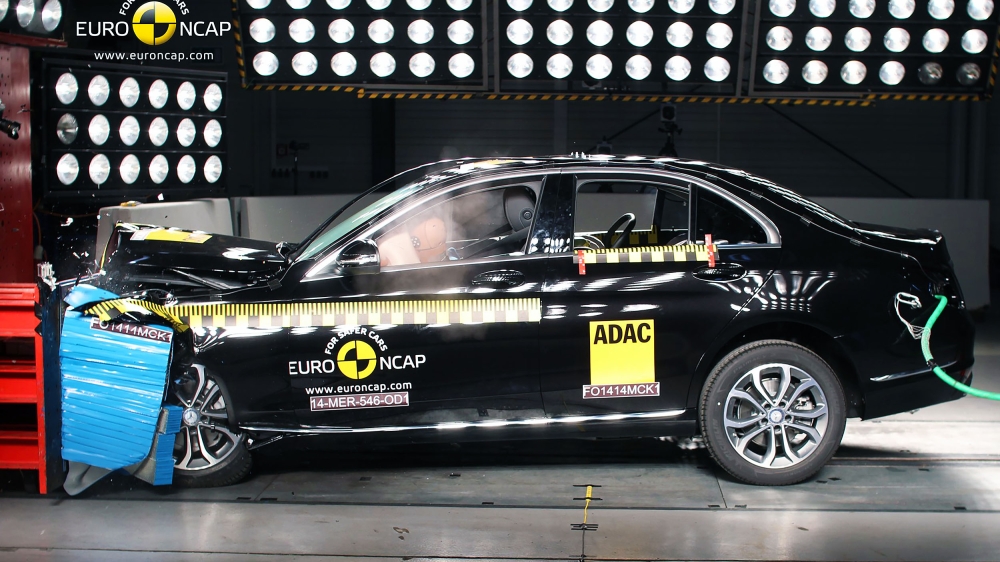
Paradigm Shift: Euro NCAP 2026 Rewrites the Rules of Car Safety
The independent European road safety body, Euro NCAP, is preparing for the most extensive revision of its testing protocol since 2009. Starting in 2026, new cars will no longer be evaluated solely on the basis of crashworthiness, but will be analyzed through a much more complex prism, covering the entire spectrum of a road event: before, during and after the accident.
The new rating system will transform the way automakers approach safety, with a major focus on active technologies, driver-vehicle interaction and post-impact management. The methodology is structured around four pillars of safety, which will ultimately determine the star rating awarded.
Pillar 1: Safe Driving
This stage brings to the forefront technologies that help prevent accidents by keeping the driver focused and in control.
- Driver Monitoring Systems (DMS): Significant points will be awarded to systems that monitor the driver's movements and activity in real time. Systems will need to demonstrate that they can correlate driver fatigue or inattention with the sensitivity of assistance systems.
- Impairment Detection: A crucial new feature is the additional points for systems that can identify signs that a driver is under the influence of alcohol or drugs. If the driver does not respond to warnings, the system will be able to safely stop the car remotely.
- Human Machine Interface (HMI): Euro NCAP responds to consumer criticism and calls for a return to physical controls for essential functions (turn signals, wipers, hazard warning lights, horn). The layout and ease of use of these controls will be assessed, putting pressure on manufacturers to abandon moving all functions to distracting touchscreens.
- Speed ??Limit Information: The rigor and accuracy of the functions that inform the driver about speed limits will be verified.
Pillar 2: Crash Avoidance
This phase expands testing of advanced driver assistance systems (ADAS) to reflect real-world scenarios.
- Autonomous Emergency Braking (AEB) and Lane Keeping Assist (LSS) Systems: These systems will be evaluated through much more complex and varied road scenarios, including intersections, curves and interaction with vulnerable users.
- Vulnerable User Protection (VRU): Testing will become more stringent to include not only pedestrians and cyclists, but also motorcyclists, ensuring robust detection and effective interventions for them.
- Real-World Driving: Assistance systems (such as lane-keeping) will be evaluated not only on the test track, but also during real-world driving to ensure they are not intrusive or annoying, which could lead drivers to deactivate them.
Pillar 3: Crash Protection
Although frontal and side impact tests remain an essential component, the evaluation of passive protection adapts to the diversity of occupants and new technologies.
- Occupant Diversity: Tests will use dummies representing a wider range of body sizes (from children to short and tall adults, 95th percentile), with an emphasis on developing more adaptive restraint systems (airbags, belts).
- Advanced Simulations: In addition to full physical tests and sled tests, advanced virtual simulations will be integrated to increase accuracy and allow for the evaluation of multiple impact scenarios.
- Protection of Vulnerable Users: Increased attention will be paid to the design of the front of cars to minimize the risk of injury to pedestrians and cyclists in the event of an impact.
Pillar 4: Post-Crash Safety
This stage is particularly important for saving occupants and managing post-impact risks, especially in electric cars.
- Access for Emergency Teams: The functionality of the exterior door handles (including electrically operated ones) after impact will be scored, to facilitate rapid intervention by rescuers.
- Electric Vehicles (EV): A vital requirement is the proper management of high-voltage battery insulation immediately after an accident, to prevent electric shock and reduce the risk of fire.
- Emergency Notifications: Automatic emergency systems (eCall) must be able to provide details about the exact number of occupants in the car, being detected even when seat belts are unfastened.
- Battery Fire Risk Warning: Electric vehicles will also be noted for their ability to provide the driver with information about a potential battery fire risk and issue appropriate warnings after impact or during charging.
Conclusion: Higher Standard and More Expensive Cars
The new Euro NCAP 2026 methodology represents a revolutionary step, transforming safety testing from a simple measurement of structural strength into a holistic assessment of a vehicle's preventive, protective and post-crash capabilities.
While the intent is clear – to reduce road accidents and fatalities – the new requirements will put significant financial and engineering pressure on automakers. Achieving the maximum 5-star rating will require the integration of advanced safety technologies, many of which will become standard equipment, which could inevitably lead to an increase in the final price of new cars, especially those in the smaller and more affordable segments.
The future of car safety is no longer just about how well you survive an impact, but about how intelligently you can avoid it and how effectively the consequences are managed.