"Reinventing the wheel" stopped in China: Steering wheel type, banned from 2027
In a move that promises to reset design standards in the global auto industry, authorities in Beijing have decided to put an end to the era of futuristic steering wheels. China's Ministry of Industry and Information Technology (MIIT) recently published a new set of strict regulations that will make it impossible to sell cars equipped with yoke-type steering wheels, starting January 1, 2027.
The decision comes as a cold shower for manufacturers like Tesla, Lexus, and local premium brands, who had promoted this design as the "future of driving." However, the reality on the ground dictated a different direction: crash safety.
The 10-Point Test: Why the "Manga" Doesn't Pass the Exam
The technical reason behind the ban is the introduction of a new homologation protocol. According to the new rules, each steering wheel must undergo impact tests at 10 specific points on its circumference.
- Missing Points: Sleeve-type steering wheels, being cut off at the top, simply do not have the physical structure necessary to be tested on all 10 points.
- Risk of "slipping": Road safety experts have found that, in the event of a secondary collision, the absence of the upper part of the steering wheel allows the driver's body to "escape" past the steering wheel, hitting the dashboard directly.
- Unpredictable airbags: The irregular shape of the sleeve creates difficulties in correctly triggering the airbag, with the risk that fragments of the casing can become dangerous projectiles for the driver.
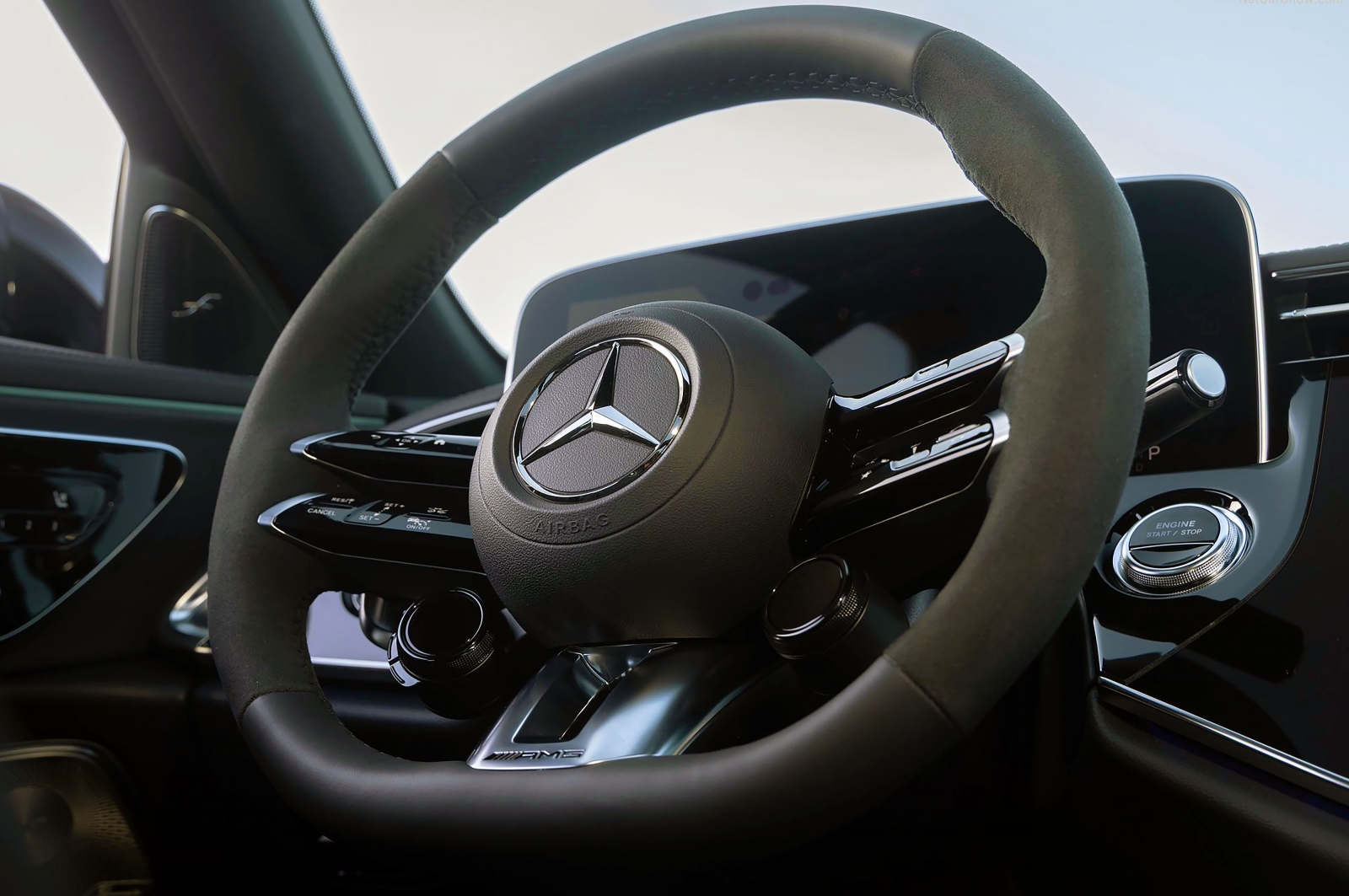
- "Statistics show that 46% of injuries suffered by drivers in accidents are caused by interaction with the steering wheel mechanism. A circular shape provides a much larger protection zone," the MIIT report points out.
Goodbye to retractable handles
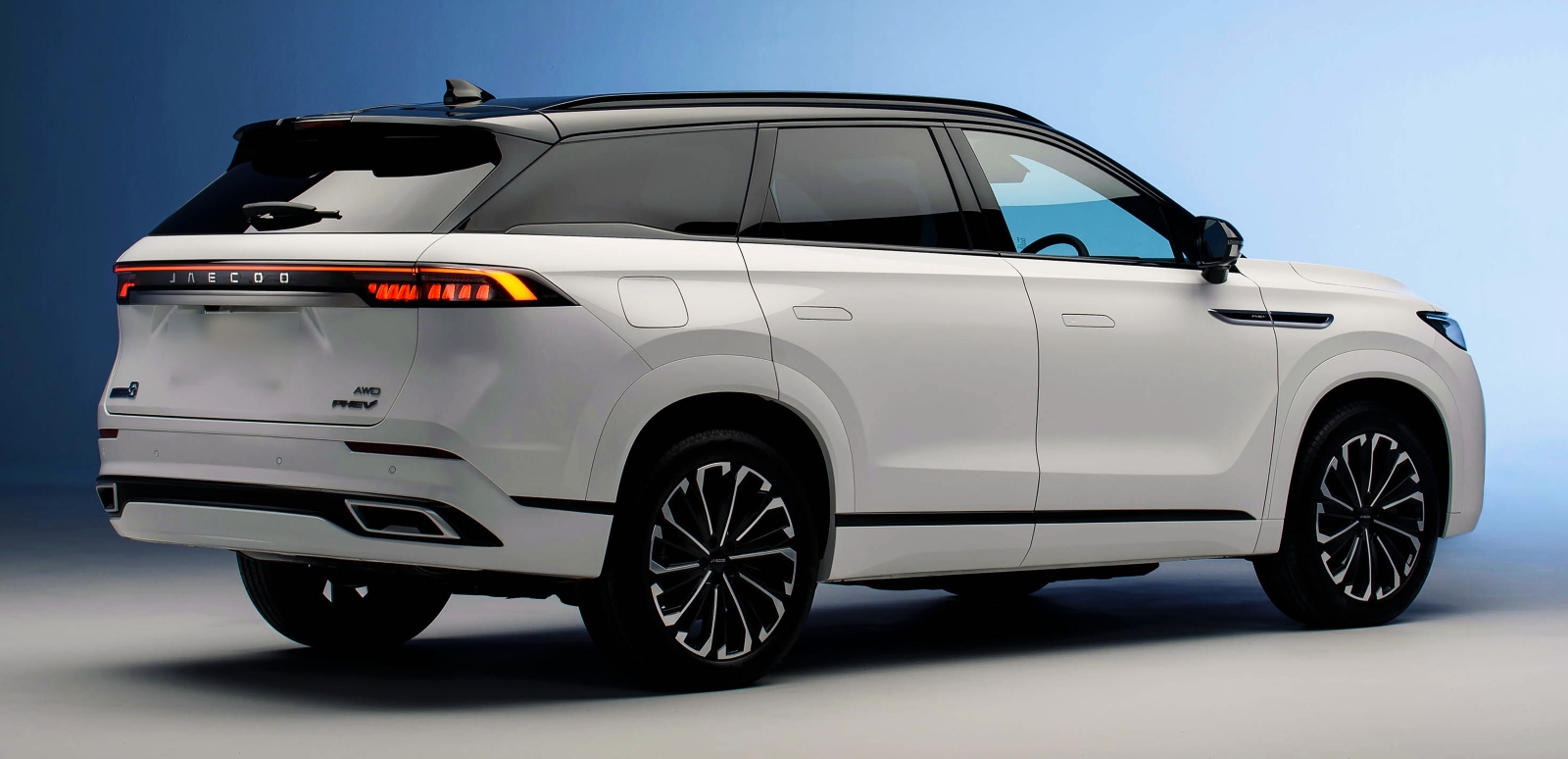
The steering wheel ban is not an isolated measure, but part of a broader legislative package targeting “technological traps.” China has also decided to ban electrically operated retractable handles (flush door handles), also from 2027.
This measure was accelerated by tragic incidents in which passengers were trapped in burning cars because the electrical system failed and rescuers were unable to operate the handles from the outside. The new rules require that all cars have purely mechanical opening mechanisms, accessible from both the inside and the outside.
Implementation schedule
| Measure | Effective Date | Grace Period (Existing Models) |
| Yoke steering wheel ban | January 1, 2027 | ~13 months |
| Electric retractable handles ban | January 1, 2027 | Until January 1, 2029 |
Impact on the global market
Although the regulations are specific to China, its status as the world's largest auto market (and leader in the electric segment) will likely force global manufacturers to drop these optional features worldwide to reduce production costs.
For drivers, the message from Chinese authorities is clear: innovation cannot be sold at the expense of survival.
Cars that can be found in traffic in Romania with yoke steering wheel
In Romania, although the paddle-type steering wheel remains an exotic rarity on the roads, it is present on a few luxury and high-tech models. Unlike China, in the European Union (and implicitly in Romania), this type of steering wheel is still legal, as long as the vehicle has received European type approval.
1. Tesla Model S and Model X (Facelift)
These are the most common vehicles equipped with a steering wheel on our roads.
- Availability: Starting with the "Plaid" and "Long Range" versions launched after 2021, Tesla introduced the sleeve as standard equipment, later becoming a selectable option in the configurator.
- In Romania: Many Tesla owners in Romania have opted for this design for its futuristic look, although some have returned to the classic round steering wheel (Tesla offers conversion kits) due to difficulties in maneuvering in the city or in tight roundabouts.
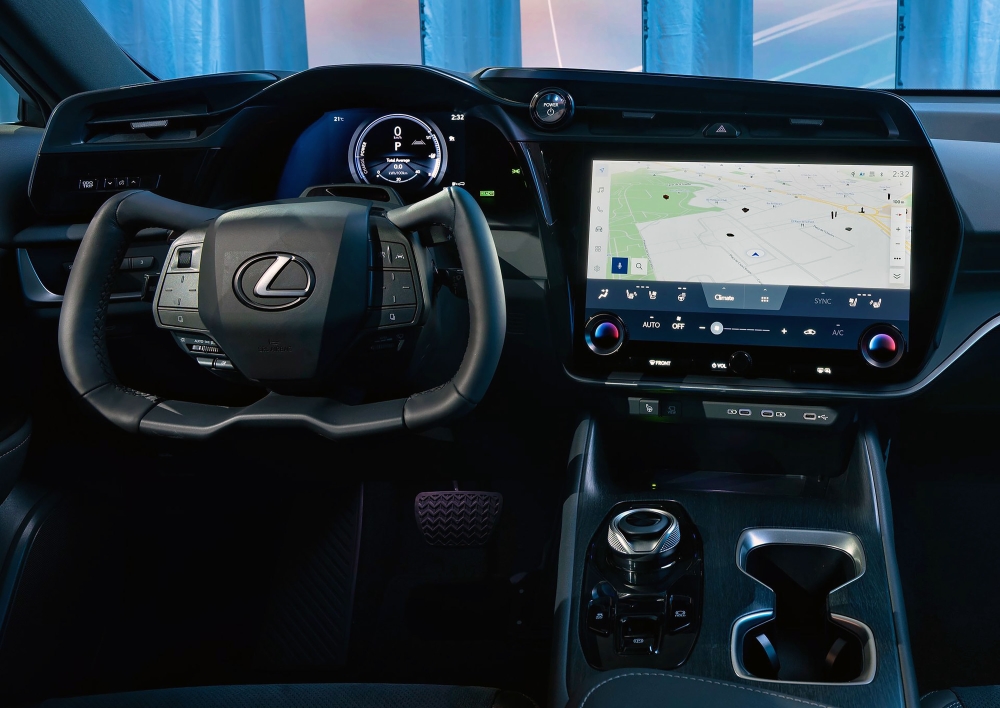
2. Lexus RZ 450e
Lexus approached the concept differently than Tesla, integrating the handle into a system called "One Motion Grip."
- Technology: Unlike Tesla, where the connection is mechanical, Lexus's system is steer-by-wire (no physical connection between the steering wheel and the wheels). This allows the steering wheel to rotate only 150°, eliminating the need to "cross your arms" in tight turns.
- In Romania: The model was recently launched on the local market, and units equipped with this system are extremely rare, generally being presentation cars or ordered by technology enthusiasts.
3. Toyota bZ4X (Variant with advanced steering system)
The Lexus RZ's platform sibling, Toyota's electric model, was also designed to receive the paddle-shift steering system.
- Status: Although officially available in Romania, most units sold here come with the conventional circular steering wheel. The paddle-shift version is only available in certain markets or through special orders that include the electronic steering system.
Safety, the "handbrake" of aesthetic innovation
China's decision to ban steering wheels and retractable handles marks a watershed moment in the modern auto industry: the end of a period in which futuristic design took a back seat to functionality. While these elements were sold as symbols of progress and an era dominated by autopilot, the harsh reality of road accidents has forced authorities to sound the alarm.
For the big manufacturers, Beijing's measure is a clear warning. In a world where cars are increasingly becoming "computers on wheels," the fundamental elements of control and access — the steering wheel and the door — must remain infallible. If a digital system fails or an airbag does not deploy optimally because of the geometry of the steering wheel, innovation becomes an unnecessary risk.
It remains to be seen whether the European Union and the United States will follow China's example or whether they will prefer to let the market and consumers decide. What is certain is that, at least in the world's largest car market, the "reinventing the wheel" has come to an abrupt halt. For the average driver, this means a return to certainties: a steering wheel that you can grip from any angle and a door that always opens, regardless of the state of the battery.
In the rush for the future, China has chosen to protect the present, reminding everyone that, in traffic, the most advanced "gadget" remains the one that saves your life.