AI Revolution on the Roads: Greece “Harvests” Thousands of Fines, While Romania Prepares for Digitalization
Road safety is undergoing a radical transformation in Europe, where the “magic eye” of artificial intelligence has begun to replace the traditional police officer with a hand-held radar. The recent experiment in Greece demonstrates not only the effectiveness of the technology, but also the extent of reckless driving.
The Athens Experiment: 2,500 deviations in 96 hours
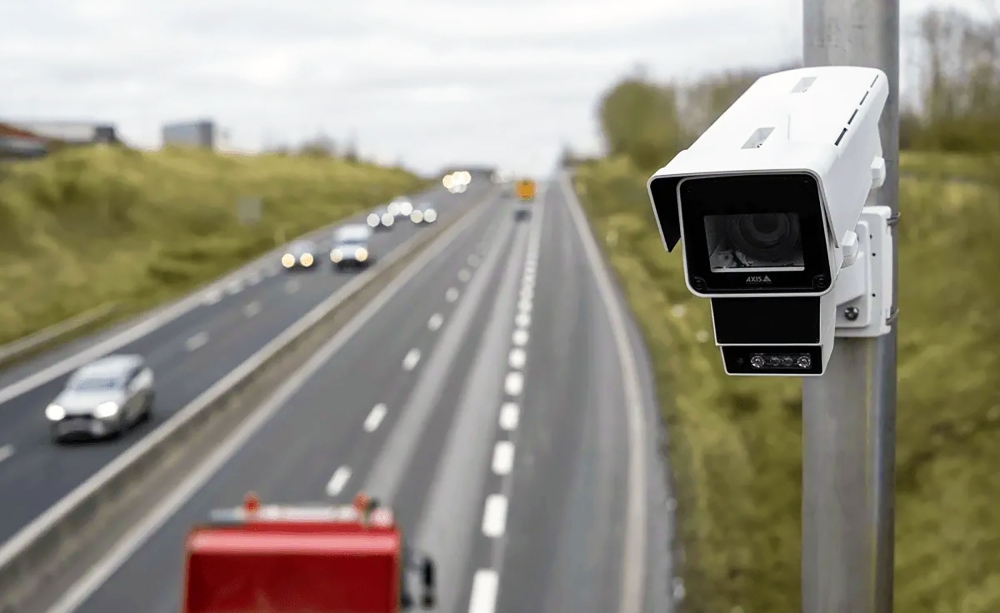
Greek authorities implemented a pilot project by installing 8 AI-equipped cameras at strategic points in Athens. The results were shocking for drivers: in just four days, the system generated over 2,500 records of traffic violations.
The most “productive” camera was the one located on the artery connecting Athens to the port of Piraeus, which alone caught 1,000 unruly drivers. What makes this technology different?
- Multitasking: It not only detects speed, but also phone use, lack of seatbelt or misuse of the emergency lane.
- Instant Processing: The system automatically generates photo/video evidence and notifies the driver via SMS or email.
- Financial Potential: Estimates show that a single camera could generate fines of 750,000 euros in just three days.
Greece's plan is ambitious: installing 2,000 fixed cameras nationwide and 500 mobile cameras on buses, specifically to free up lanes dedicated to public transport.
What's happening in Romania? "Radarul Fix" returns in a new form
While the Greeks are already counting the fines, Romania is in a stage of accelerated modernization of the monitoring infrastructure through the e-SIGUR project.
1. The e-SIGUR Project and the Monitored System
Romania is preparing an automated detection system that will include hundreds of monitoring points on national roads and highways. This will not be just a speed camera, but an interconnected ecosystem that will automatically check license plates against databases (for RCA and ITP).
2. Monitoring on high-speed roads
The National Road Infrastructure Management Company (CNAIR) has already started installing modern monitoring systems on the A1, A2, A3 motorways and on DN1. Although many of these currently operate for statistics or traffic monitoring, the legal framework is being updated to allow their transformation into approved fixed speed cameras.
3. "Smart" Rooms in Bucharest
In the Capital, there is discussion about installing a traffic monitoring system that would automatically sanction:
- Switching to red.
- Stopping on public transport lanes (STB).
- The turns on the line continue.
Unlike in Greece, in Romania the main barrier was until recently the legislation that required the fine to be handed over by a police officer or the report to be signed manually. New legislative changes now allow the use of digital video evidence for automated sanctioning.
Comparison: Greece vs. Romania
| Feature | Greece (Pilot Project) | Romania (2024-2025 Status) |
| AI Camera Count | 8 installed (Target: 2,500) | Hundreds planned via PNRR (e-SIGUR) |
| Violation Types | Speeding, Seatbelt, Mobile Use, Bus Lanes | Speeding, Insurance (RCA)/ITP, Red Light |
| Notification Method | Digital (SMS, Email, Online Portal) | Registered Mail / Digital (via MAI Hub) |
| Primary Objective | Accident reduction & revenue collection | Traffic discipline & automated fleet monitoring |
Conclusion
AI technology eliminates the subjective factor and the "negotiation" with the traffic officer. If the Greek model is implemented on a large scale in Romania, drivers who tend to ignore the rules in bus lanes or use their phones while driving will have to change their habits, as the fine will arrive on their phone before they reach their destination.